Whoa! I loaded the network dashboard and blinked. My first impression was that it was surprisingly fast. Initially I thought this would be another clunky explorer, though actually the way the data streamed in changed my mind. The UI felt immediate and honest, like a dashboard built by people who use the chain every day.
Seriously? The latency was low. I watched a transaction confirm and the details popped up before I could finish my coffee. That moment made me curious about the tooling behind the speed, because speed alone isn’t everything. My instinct said there was a solid caching layer and efficient RPC orchestration behind the scenes. Later I dug into the developer docs and yep — things lined up better than I expected.
Hmm… somethin’ about the analytics layer bugs me sometimes. The metrics are rich, but the narratives around them can be thin. On one hand the raw traces and program logs give you everything; on the other hand you still need to stitch together context for complex flows like cross-program invocations. I like that the explorer doesn’t hide the noise though, because sometimes that noise is where the real signals live.
Here’s the thing. Explorers matter because they translate opaque ledger data into human decisions. Short. Clear. Useful. When I’m evaluating a token or a program, I want to follow money, not marketing, and good explorers make that path legible. That legibility is what separates quick curiosity from actionable insight.
Wow! There are features I didn’t expect. Transaction heatmaps, token holder distributions, and speed-of-confirmation graphs were all there. Those tools make it easier to answer questions like who really holds the supply, or which accounts are spamming the network. And when you combine those views you often see patterns you wouldn’t catch scanning raw logs.
Okay, so check this out — I started bookmarking addresses. It was simple and weirdly satisfying. The ability to tag an address and export its history saved me hours of manual chasing. I exported CSVs, ran small scripts, and cross-referenced on-chain events with off-chain announcements, and that workflow revealed coordinated activity that looked suspicious.
My gut said this kind of detective work would require a full-time team. Actually, wait — with the right explorer and a few CLI tools I was doing it on a weekend. On the surface that sounds small, but it changes the game for independent researchers. Suddenly you can answer “who moved the funds” in the same session you noticed the movement, and that immediacy helps close the information gap between whales and regular users.
Really? The program logs layer surprised me again. You can step through instructions and see CPI calls in context, which matters a lot when debugging DeFi positions. The context is essential because transactions often look like single events, though actually they are composed of chained program interactions where each link matters. I caught an exploit pattern by tracing nested calls, and that saved a friend from a nasty liquidity trap.
Here’s the thing. Not all explorers give you the same fidelity. Some surface only high-level txn info, while others let you inspect inner instructions and account state snapshots. Short. You want both perspectives. The deep view helps developers and auditors, while the shallow view serves traders and curious users who need quick reassurance.
Whoa! I should mention token analytics too. Cookie-cutter charts are common, but useful supply breakdowns and holder concentration visuals are rarer. Those visuals helped me spot a token with heavy centralization — very very centralized, actually — and that changed my stance on participating in its liquidity pool. That awareness is the kind of thing that prevents regrets.
Hmm… about NFTs. The explorer’s NFT pages show ownership history and marketplace activity in a single timeline. That timeline is great because you can quickly eyeball wash trading or rapid flips. On one drop I noticed a cluster of rapid transfers between freshly-created wallets, which made me raise an eyebrow before bidding. I’m biased, but I avoid projects that look too polished on paper and too messy on-chain.
Okay, small tangent — validators and staking tell the story of decentralization health. The validator table lets you compare vote credits, uptime, and epoch rewards. That comparison matters, because staking to a poorly performing validator can silently erode yields. If you’re delegating, do at least a tiny check; trust but verify, right?
Really? The API access made integrating analytics into apps straightforward. I built a quick dashboard that highlights large holders and shows realtime mint events. There were a few quirks in pagination and rate limits, and I had to add backoff logic, but overall the data was reliable enough to power a user-facing widget. That’s not trivial; many explorers offer read-only insights but choke under production traffic.
Here’s the thing — wallet interactions feel safer when you can trace the instruction intent before signing. Short. When a wallet links a transaction preview to an explorer view, that extra step reduces confusion and social-engineering risk. I wish more wallets integrated this natively, because it reduces dumb mistakes made in haste.
Whoa! Check this out — sometimes the memos tell you more than the on-chain fields. People drop context into memos and it can be the clue that links a transaction to an off-chain event. That said, memos are user-input and can be misleading, so treat them as hints. I once followed a memo thread and it led me to a Discord announcement that explained a sudden spike in activity.
Initially I thought explorers were solely for devs, but then I realized they’re for anyone trying to make sense of value flows. On one hand the analyst toolkit is deep, though actually the best explorers balance depth with accessibility. They let a new user answer simple questions quickly while providing power tools for advanced workflows, and that spectrum is what makes an explorer stick in the ecosystem.
Hmm… privacy considerations matter too. Public blockchains are transparent by design, and explorers amplify that transparency. If you’re privacy-conscious, you need to be careful about address reuse and leaking metadata. I won’t romanticize privacy, but I will say that good explorer design can nudge users toward safer habits without being preachy.
Wow! There’s a practical takeaway. Bookmark explorers you trust, learn to read program logs, and use CSV exports for deeper analysis. Small steps like that turn raw curiosity into informed decisions. My instinct said this would be time-consuming, but with the right tools it’s surprisingly doable on evenings and weekends.
Where to start — a hands-on recommendation
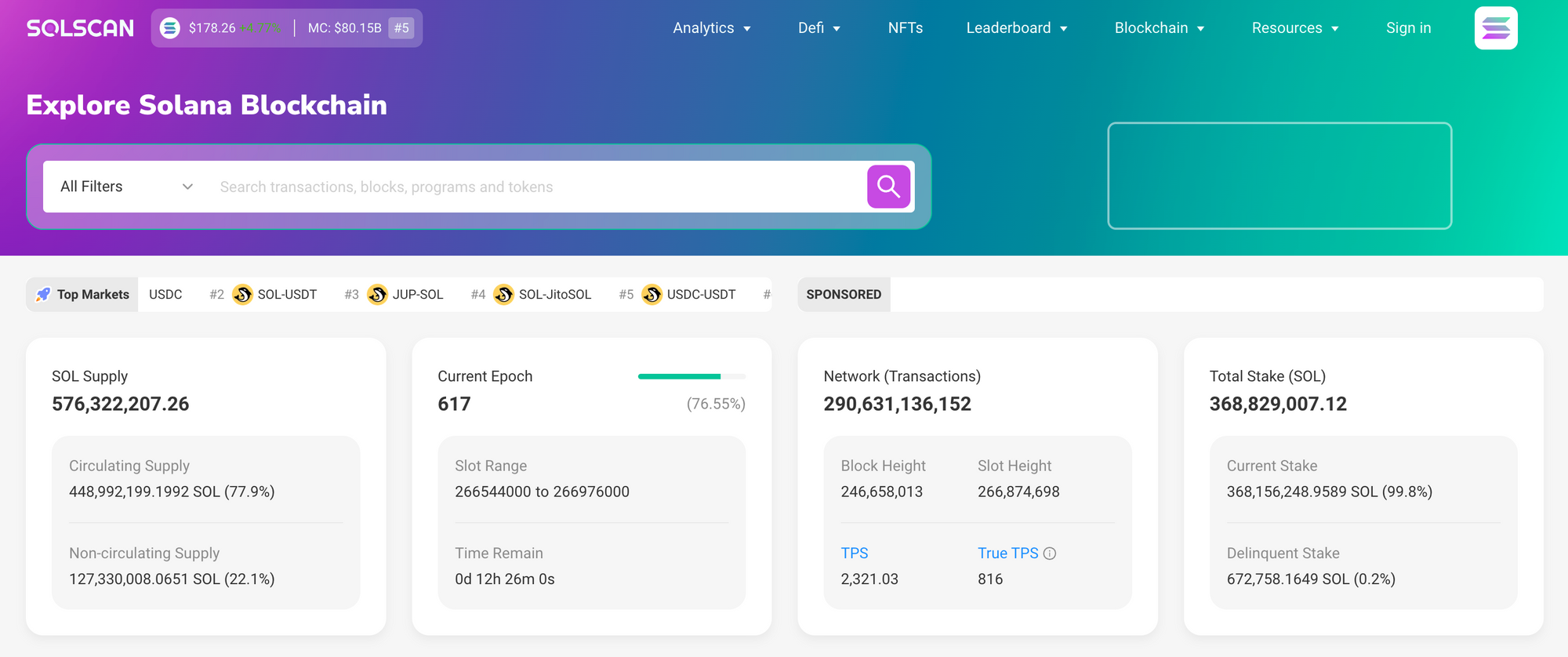
If you want to try a balanced, user-friendly Solana analytics experience, give solscan a look. Short. Use it to inspect transactions, trace token flows, and validate program interactions before you commit funds. The combination of real-time UI, exportable data, and program-level visibility makes it a practical choice for researchers, devs, and regular users alike.
On one hand it’s simple for newcomers, though actually it scales into a pro-level toolkit when you dig deeper. The learn-by-doing curve is gentle, and the community around these tools often shares practical queries and filters you can reuse. I’m not 100% sure every workflow is covered, but most common auditing tasks are easier with the right views.
FAQ
Can explorers help catch scams?
Short answer: yes, sometimes. You can spot concentration of supply, rapid wallet spinning, and suspicious contract behavior, and those are red flags. Longer answer: explorers give you the data, but interpreting it requires context and some pattern recognition, so pair the on-chain signals with off-chain research and healthy skepticism.
Is API access reliable enough for production?
Generally yes, though expect rate limits and occasional hiccups. Add retries and caching. For heavy usage, consider running your own RPC or batching requests through a resilient service. That architecture will cost more, but it reduces surprises in production.
What should beginners focus on first?
Start with transaction details and token holder snapshots. Short. Learn to read inner instructions and account state changes, then move to program logs and export workflows. Over time you’ll build heuristics that cut through noise and help you make faster, safer choices.
Leave a Reply